Storiestariffs · supply chain · Canadian manufacturing · trade policy · automotive industry · business strategy
Tariffs Hit Hard: How $20B Reshapes Canadian Manufacturing
$20 billion in tariffs are forcing Canadian manufacturers to rethink supply chains overnight. Discover which sectors suffer most and how businesses are fighting back.
YIP Editorial
YIP Founder Growth Lab
August 25, 202610 min read5 reads
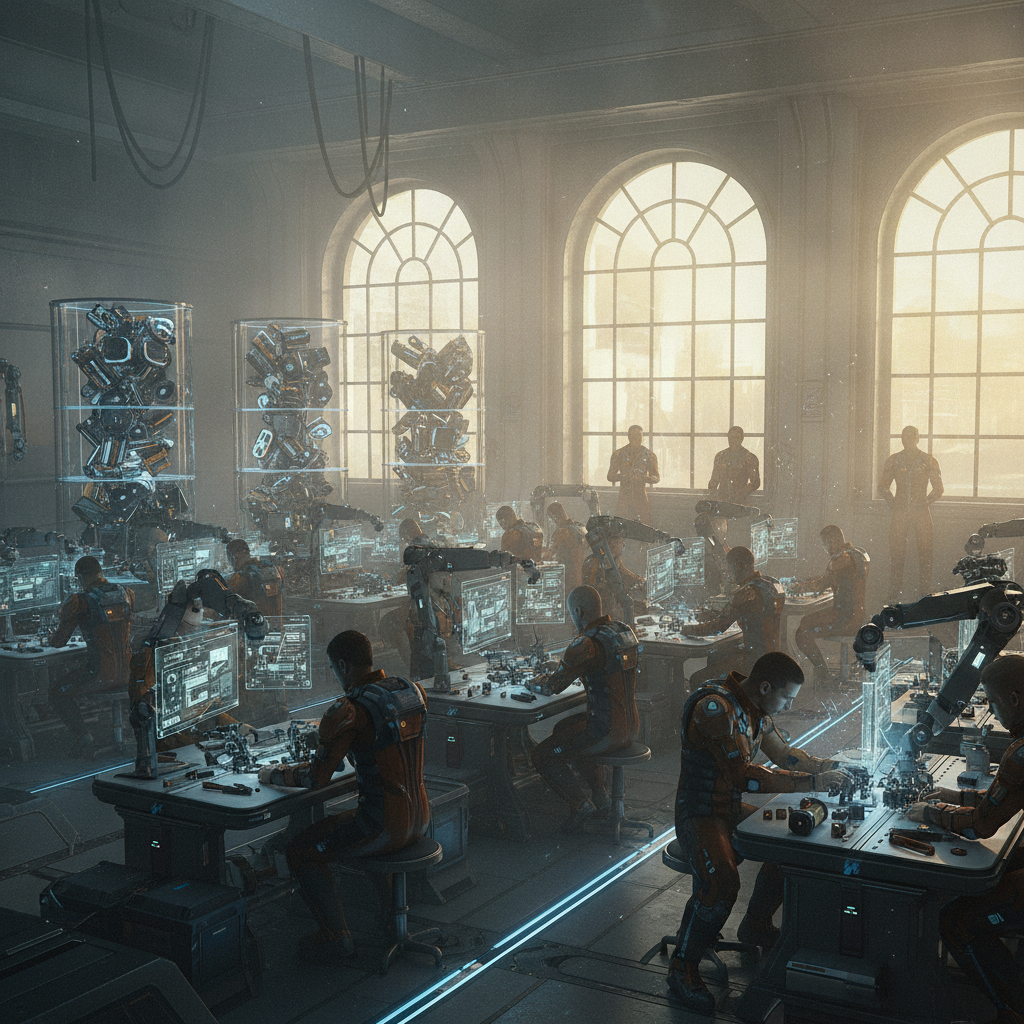
Canadian manufacturers are facing a moment of truth. With tariffs now officially in effect, the landscape has shifted overnight, and the $20 billion impact isn't theoretical anymore.
The pressure is real, immediate, and uneven. Some sectors are scrambling to absorb cost hikes; others are already hunting for new suppliers or rethinking where they build altogether. If you run a factory, source components, or depend on cross-border trade, the next 12 months will define your competitive position for years.
Let's walk through what's actually happening, where it hurts most, and what businesses are doing to survive and thrive.
Which sectors are getting hit the hardest?
Automotive is feeling it first and worst. Canadian car plants depend on integrated supply chains with the U.S. engines, transmissions, and electronics flow across the border in both directions multiple times before a finished vehicle rolls off the line. Tariffs on parts and finished goods are squeezing margins on vehicles already sold at thin profit margins. Major OEMs are absorbing costs in the short term, but expect price increases and delayed production as they negotiate new supplier contracts.
Agriculture and food processing are also reeling. Tariffs on inputs like fertilizer, packaging, and equipment ripple through the entire chain. Farmers face higher costs for seeds and machinery, while food processors watch their export markets shrink as U.S. tariffs rise on Canadian agricultural goods. The sector is caught in a pincer: costs up, demand down.
Electronics and tech manufacturing are swimming against the tide. Components sourced globally become more expensive; finished goods bound for the U.S. market now carry tariff premiums. Mid-sized tech manufacturers that can't absorb the hit are already exploring nearshoring or reshoring, moving production closer to home or further afield, away from tariff zones.
Pharmaceuticals and medical devices face tighter margins on research costs and component sourcing, though tariff schedules have carved out some breathing room for critical goods. Still, any manufacturer relying on imported active pharmaceutical ingredients or precision components is renegotiating supplier terms.
How much are input costs actually rising?
It depends on the tariff rate and what you're buying. Steel and aluminum tariffs are pushing up across the board, 10-25% depending on alloy and finish. Plastics, textiles, and rubber are climbing too. For a mid-sized manufacturer assembling finished goods, the cost shock is typically 3-8% on gross inputs, which translates to 1-5% pressure on net margins if volume stays flat.
The real sting comes when tariffs hit intermediate goods. A parts supplier making a component for an automaker gets hit with tariffs on raw material, then the automaker gets hit again on the finished part. That compounding effect can push total tariff burden to 15-20% for some high-complexity products.
Smaller manufacturers without negotiating power are getting squeezed harder. A business with $5 million in annual input costs might see $250,000-$400,000 in new tariff burden appearing on invoices within 60 days.
Tip
Track your tariff codes now. Every product has an HS code, and rates vary wildly. Ten minutes with a trade lawyer or your customs broker identifying your exact codes can reveal exemptions or lower-rate alternatives worth thousands monthly.
What are businesses doing to adapt?
Aggressive supplier renegotiation is happening everywhere. Manufacturers are going back to existing vendors and asking: Can you absorb the tariff hit? Can you shift production to a tariff-advantaged location? Can you lock in prices for 12 months? The strongest suppliers with diversified customer bases have leverage; weaker ones are folding or being replaced.
Nearshoring and localization are suddenly attractive. A furniture maker importing hardwood from Southeast Asia is now pricing out Mexican or Central American suppliers to avoid U.S. tariff zones. An electronics assembler in Ontario is exploring whether it makes sense to shift final assembly northward to avoid tariffs on finished goods. The calculus has flipped.
Product redesign and substitution are underway in labs and CAD stations. If a component made from tariffed material is 20% more expensive, engineers are asking: Can we use a different material? Can we simplify the design? Can we source locally at a reasonable quality level? This is slower and riskier, but it's happening.
Inventory buildup and forward buying occurred before tariffs fully kicked in. Any manufacturer with cash flow rushed to stock up on tariffed inputs at old prices. Warehouses in industrial parks across Canada are fuller than they've been in years. That's a short-term cost (carrying costs, working capital tied up) but buys time to execute longer-term shifts.
Price increases to customers are the blunt tool many are using. If you can't dodge the tariff, you pass it down. Retailers, contractors, and downstream manufacturers are seeing price increases on their invoices. The question is whether demand can bear it, or whether volume falls and the price hike backfires.
How long will this last, and what's the endgame?
That depends on trade negotiations, which move slowly. Tariffs might ease in months, hold steady for years, or escalate further. Most economists and trade analysts expect some version of the current regime to stick for 12-24 months as negotiating positions harden.
Manufacturers are planning for the tariffs to be permanent, or close to it. That changes investment decisions. If you were on the fence about building a plant in Mexico or moving production elsewhere, tariffs make the case sharper. Conversely, if you're investing in automation or efficiency, the ROI calculation just improved because the alternative (tariff exposure) is now more expensive.
The winners in a tariffed environment are:
- Manufacturers who can source critical inputs domestically or from tariff-free partners
- Businesses nimble enough to redesign products or swap suppliers mid-stream
- Companies with cash reserves to absorb the shock and negotiate from strength
- Those producing goods that face no tariffs or lower rates
The losers are:
- Small and mid-sized players without supply chain flexibility
- High-complexity manufacturers dependent on integrated North American supply chains
- Businesses with thin margins that can't raise prices without losing volume
- Companies geographically trapped in tariff zones with no near-term escape route
What should you do right now?
If you're running a manufacturing business, the time for action is now, not next quarter:
Audit your supply chain. Map every input. Identify tariff rates. Find out where tariffs apply and where exemptions or lower rates exist. Your trade lawyer or customs broker can do this in a few days.
Model three scenarios: tariffs stay, tariffs ease by 25%, tariffs escalate. What's your margin impact in each? What's your breakeven on shifting production or suppliers?
Talk to your suppliers and customers. Suppliers need to know your volume outlook so they can plan. Customers need transparency about price changes coming their way. Candor builds trust when margins are under pressure.
Explore alternatives in parallel. Start conversations with suppliers in Mexico, Central America, and other tariff-advantaged zones. Run a design engineering sprint to see if product simplification or material substitution is viable. Neither has to happen, but you need to know the options and costs.
Invest in efficiency where you control the levers. Automation, process improvement, and waste reduction are pure upside. You're not dependent on negotiations or external factors. A 3-5% efficiency gain can offset a good chunk of tariff pressure.
Key takeaway
The $20 billion tariff shock is forcing a structural reset in Canadian manufacturing. The companies that survive and grow are those moving fast now to renegotiate supplies, redesign products, or relocate production, not those hoping tariffs disappear.
Can smaller manufacturers compete in a tariff-heavy world?
Yes, but strategy matters more than size. Small manufacturers win by being hyper-specialized, finding a niche where they're the only credible supplier, or offering service and customization that big players can't match. In a tariff world, responsiveness and flexibility often beat volume and scale.
A small shop that can pivot suppliers in weeks and redesign tooling in days has an advantage over a mega-manufacturer locked into year-long supply contracts and slow decision-making.
The path is harder and the margins are tighter, but it's not impossible. The key is knowing your tariff exposure cold and moving fast.
What does this mean for Canadian consumers?
Consumers feel tariffs indirectly but significantly. Prices on imported goods and goods made with tariffed inputs will rise. A car might cost $500-$1,500 more. Groceries will inch up as agricultural and food processing costs flow through. Electronics and appliances will follow.
The silver lining is that domestic manufacturing might become more competitive. If a Canadian company can make something locally at a tariff-adjusted cost, it suddenly looks better relative to imports. Over time, you might see more "Made in Canada" labels on goods that were previously sourced from the U.S. or overseas.
But that transition takes years, and consumers pay in the meantime.
Is relocating production outside tariff zones the answer?
For some companies, yes. For most, it's a last resort because it's expensive, slow, and risky. You're building or renting new facilities, training new workforces, qualifying new suppliers, and taking on geopolitical and operational risk in new countries.
The calculus only works if:
- Your tariff exposure is massive (more than 5-10% of COGS)
- You have the capital to invest ($5 million-plus for meaningful relocation)
- You're building for a long time horizon (5+ years)
- The destination country offers tariff advantages and political stability
For most Canadian manufacturers, relocation is one tool in a bigger toolkit, not the whole solution. Renegotiating supplies, redesigning products, and improving efficiency often deliver better ROI faster.
Will tariffs force consolidation in Canadian manufacturing?
Likely, yes. Stronger companies with capital, scale, and supply chain flexibility will acquire weaker competitors who can't adapt. Private equity is already circling some industrial sectors, looking to consolidate fragmented competitors and build operational efficiency.
The landscape will probably shrink in terms of the number of independent manufacturers, but survivors will be larger and more diversified. That's not inherently bad, but it does mean less variety and potentially higher prices if competition thins too far.
FAQ
What are HS codes and why do they matter for tariffs?
HS codes are the harmonized system codes that classify products for tariff purposes. Every physical product has a code, and tariff rates vary wildly by code. Your steel fastener might be 5%, but a similarly shaped fastener in a different material might be 25%. Knowing your exact HS codes can reveal exemptions, lower rates, or alternative classifications that save thousands monthly. Your customs broker or trade lawyer can identify them in days.
How do tariffs affect product pricing downstream?
Tariffs increase input costs for manufacturers, which usually flow through to wholesale prices, then retail prices. A tariff on imported components might add 2-4% to manufacturing costs, and the final retail price might rise 1-3% depending on how many margins sit between manufacturer and consumer. Some companies absorb tariffs to stay competitive; others pass them through fully. Either way, tariffs don't disappear; they just show up somewhere in the supply chain.
Can small manufacturers negotiate tariff relief or exemptions?
Rarely. Tariff schedules are set by government trade policy and apply equally to all importers. Some products do have exemptions or lower rates, but those are decided at the policy level, not negotiated case-by-case. What small manufacturers can do is work with trade lawyers to identify the lowest applicable tariff code for their product, which can cut their rate significantly and legally.
Which Canadian manufacturing sectors are growing despite tariffs?
Domestically-focused and tariff-advantaged sectors are holding up better. Food and beverage manufacturing serving local markets, construction materials, and forestry products face less tariff pressure than export-heavy or import-dependent sectors. Tech and life sciences manufacturing in Canada are also relatively protected because they often serve niche markets or have specialized input advantages. Automation and heavy equipment manufacturing, meanwhile, are exploring relocations to serve U.S. and Mexican markets from lower-tariff positions.
How long does it take to shift suppliers to avoid tariffs?
Months to years, depending on complexity. Switching to an existing domestic supplier might take 3-6 months of qualification and validation. Finding and qualifying a new international supplier outside tariff zones might take 6-12 months because of travel, audits, and sample testing. Redesigning a product to use different materials might take 6-18 months if it requires engineering and tooling changes. Most companies are running parallel efforts, so they have options ready as soon as one path clears.
Are there tariff exemptions for critical goods or sectors?
Some, but they're limited. Critical pharmaceuticals, medical devices, and some raw materials have exemptions or lower rates. Certain agricultural products also get preferential treatment. But exemptions are not automatic; you have to apply and qualify. Even with exemptions, you still face tariffs on components or inputs unless they're also explicitly exempted. Talk to your trade lawyer about what might qualify for your products.
What's the difference between tariffs paid by importers versus built into pricing?
Importers (manufacturers or retailers) pay tariffs as a direct cost when goods cross the border. That tariff cost gets added to their landed cost and either absorbed or passed downstream. The key is that tariffs are a real cash expense, not a phantom cost. A company importing $1 million in goods at 15% tariff rate pays $150,000 immediately, which affects cash flow and working capital, not just margin reporting. That's why many companies built inventory before tariffs kicked in.
Can tariffs actually help domestic manufacturers win back market share?
In theory, yes. If U.S.-made or foreign-made goods become more expensive due to tariffs, Canadian-made goods become relatively more competitive, even if they're not cheaper in absolute terms. Over time, that can drive volume back to domestic producers. The challenge is that this transition takes years, requires investment in production capacity, and only works if Canadian manufacturers can deliver quality and service at a reasonable price. Some will; many won't make the investment or won't be able to compete on cost even with tariff protection.
Sources: Statistics Canada, Government of Canada Department of Finance, U.S. International Trade Commission, Canadian Manufacturers & Exporters Association