Storiesgame design · narrative · UI design · tutorials · player experience · immersion
Support as Storytelling: Embedding Help Mechanics into Game Narrative
Discover how games turn tutorials and hints into narrative moments that deepen immersion instead of breaking it.
YIP Editorial
YIP Founder Growth Lab
August 25, 20265 min read8 reads
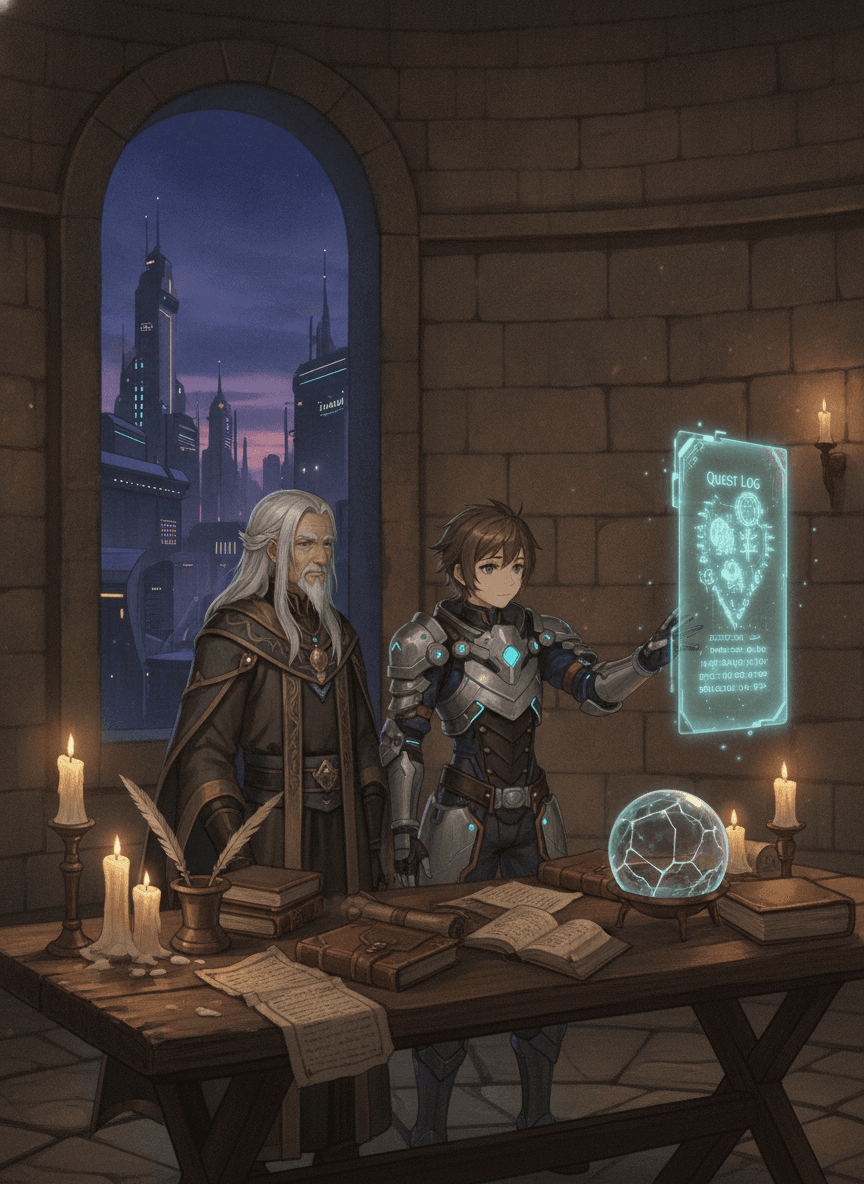
TL;DR: The best games hide their tutorials and hints inside the world itself, through NPC companions, diegetic UI, and quests that teach without stopping the story.
Most games have a problem: they need to teach you how to play, but stopping the action to show you a menu feels like stepping out of a movie. The moment a tutorial prompt appears, immersion cracks. You're no longer exploring a world; you're following instructions on a screen.
But some games have cracked this code. They've learned that support and storytelling aren't opposing forces, they're the same thing. When a hint comes from a character you care about, when a tutorial moment advances the plot, when the game's UI feels like it belongs in its world, help stops feeling like friction and starts feeling like discovery.
Why Traditional Tutorials Break Immersion
Most games treat tutorials as a chore to get through. You spawn in a tutorial zone, a text box tells you to press W to move, and you obey. It works mechanically, but narratively you're watching an instruction manual unfold instead of experiencing a world. The player isn't your character discovering how to wield a sword; they're a person reading step-by-step guidelines.
This gap matters because immersion is fragile. The moment a player remembers they're holding a controller, the magic fades. A tutorial box with white text on a black background is designed to grab attention, and it does, just not the right kind.
The worst offenders are mandatory tutorials that treat experienced gamers like children. If you've played a hundred games before, being told "left-click to select" feels condescending. But games can't assume every player knows how to play, so many resort to padding tutorials with time-wasting steps that make veterans want to skip the whole opening.
Diegetic UI: Making the Game's Help Part of Its World
Diegetic UI means the interface exists inside the game's fiction, it's something your character can see and interact with, not just something floating on your screen for you.
The Legend of Zelda: Breath of the Wild does this masterfully. When Link pulls out his Sheikah Slate, you're not looking at a menu imposed from above; you're looking at a magical device that exists in that world. The tutorial teaches you the Slate's abilities because your character is discovering them in-world. A gentle NPC companion (the old man on the Great Plateau) explains what you can do without making it feel like he's reading from a manual.
Compare this to a typical MMO where a quest-giver gives you a multi-paragraph explanation that's clearly written for the player reading the screen, not the character hearing it. One feels like a conversation; the other feels like reading a wiki.
Games like Outer Wilds push this further. Your spaceship's log entries aren't cutscenes, they're investigation tools that deepen the mystery. Every piece of UI serves narrative. The help system is the story.
Tip
When designing tutorial moments, ask: could this moment happen naturally in the world? If the answer is no, the UI is breaking immersion.
Companion Characters as Living Tutorials
The best narrative help comes from a character the player cares about. If your companion is charming, funny, or invested in your survival, their advice stops feeling like a hint and starts feeling like genuine support.
Portal 2 nails this by pairing the player with GLaDOS and Wheatley, AI characters with personality and agenda. When they guide you, they're not breaking character to help; they're advancing their own goals through you. The "tutorial" is actually a conversation between two characters, and the player learns by listening.
Similarly, Baldur's Gate 3 lets companions offer advice in character. A rogue might suggest sneaking, a cleric might warn about undead. The game isn't lecturing you on game mechanics; characters are giving counsel based on who they are. This makes help feel earned rather than imposed.
Even in action games, companion-based guidance creates investment. In God of War, Kratos's son Atreus learns alongside the player. When he says "Father, be careful of that enemy type," it's a hint wrapped in character moments. You're not reading a tooltip; you're hearing a child worry about his dad.
The key is personality. A faceless hint system feels like your game judging your skill. A character offering guidance feels like your allies believing in you.
Quest Design as Gentle Teaching
Thoughtfully designed quests can teach complex systems without ever mentioning mechanics. Instead of telling players how a crafting system works, you give them a quest that requires crafting. Instead of explaining elemental damage, a boss fight naturally teaches it when fire-type attacks clearly work better.
The Witcher 3 does this quietly. Geralt already knows how to hunt monsters, so the game doesn't explain witcher senses as a mechanic, it demonstrates them through investigation sequences. You're not learning a feature; you're doing Geralt's job.
This approach scales beautifully. New players naturally discover what they need through organic story progression, while veterans never feel lectured. The game trusts players to experiment and learn.
Key takeaway
Great games teach through world-building and character, not through pause menus. When help feels like a natural part of the story, players stay immersed and remember the experience longer.
Advanced Support: AI-Driven Companions
Modern games are pushing further by making companions genuinely responsive. In-game AI guidance systems can now offer contextual hints that feel spontaneous rather than scripted. An NPC companion might notice you're struggling with a puzzle and offer advice, not because the game detects you've failed three times, but because the AI feels your companion's personality naturally prompts them to help.
This is where support mechanics meet narrative depth. Imagine a mentor character who genuinely understands the game's mechanics and your character's skill level, offering guidance that's both mechanically sound and emotionally resonant. That's the frontier.
The Takeaway
Support doesn't have to feel like a burden. When tutorials hide inside diegetic UI, when companions offer guidance with personality, and when quests teach through narrative momentum, help becomes part of what makes a game memorable. The friction disappears. The world deepens.
The best games don't break immersion to teach you, they immerse you deeper through teaching. That's when you stop thinking about what the game is telling you to do, and you start believing you're the person doing it.
*Sources: The Legend of Zelda: Breath of the Wild official guide, [Portal 2 design documentation](https://www.thinkw