Stories
Building an Anti-Coercion Alliance: Canada's New Geopolitical Strategy
Canada builds a Nordic partnership to resist weaponized trade, strengthen supply chains, and align democracies against geopolitical pressure.
YIP Editorial
YIP Founder Growth Lab
August 25, 20266 min read5 reads
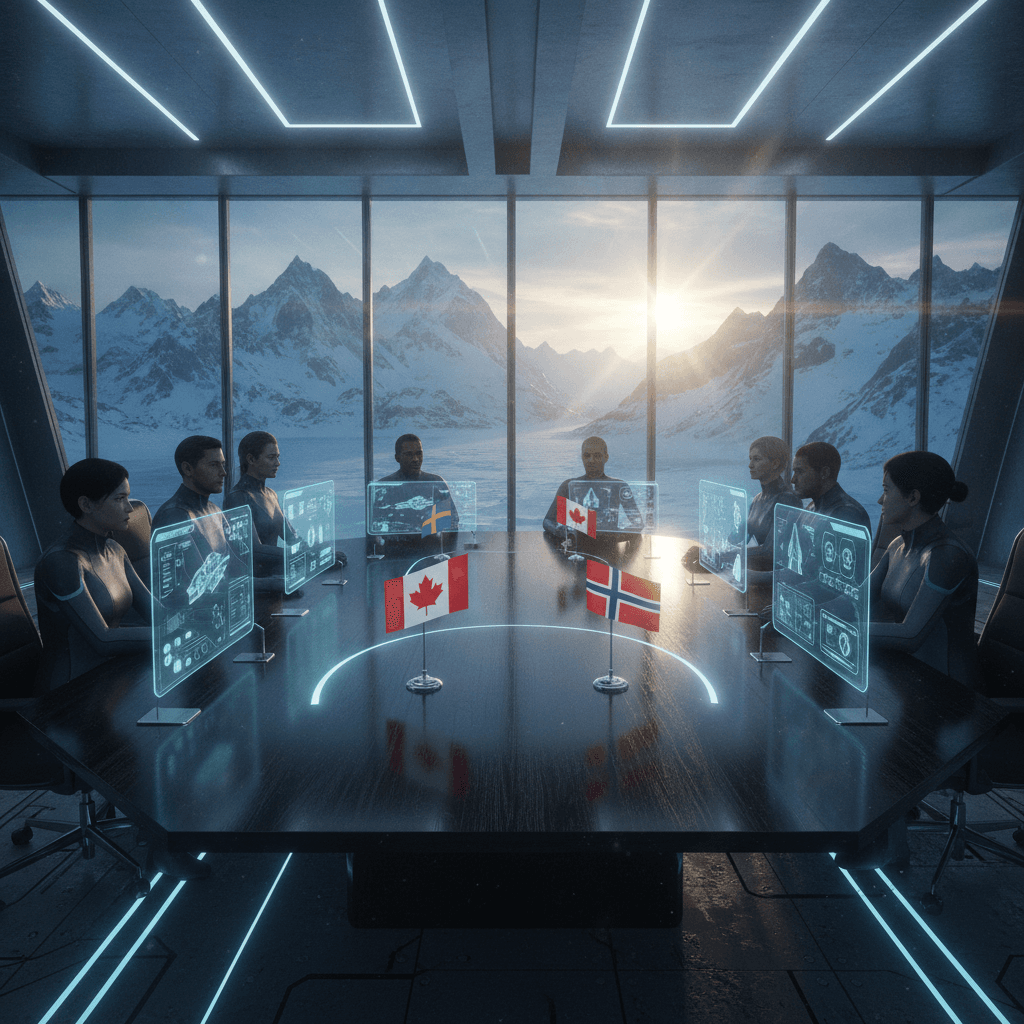
When trade becomes a weapon, partnerships become a shield. Canada faces an era where economic ties are weaponized as geopolitical tools, and the nation is responding by forging deeper relationships with Nordic countries to insulate critical sectors and protect democratic interests.
What Is Trade Coercion and Why Does Canada Face It?
Trade coercion is the deliberate use of economic sanctions, tariffs, or market access denial to punish or pressure nations into political compliance. Canada has experienced this firsthand: agricultural exporters faced Chinese tariffs after Ottawa detained a Huawei executive, and energy sectors felt pressure during disputes over resources and values.
The stakes are real. Unlike traditional military confrontation, trade coercion happens in peacetime and targets civilians through job losses, supply shortages, and inflation. Canada's vulnerability stems from its dependence on a handful of trade partners and its reliance on imported critical minerals for everything from electronics to renewable energy.
How Do Nordic Countries Help Canada Counter Coercion?
Nordic nations (Denmark, Finland, Iceland, Norway, and Sweden) share Canada's democratic values, rule-of-law commitments, and experience resisting geopolitical pressure. Together, they form what geopolitical analysts call a "coercion-resistant coalition."
Finland and Sweden's recent NATO accession strengthens collective defense, while Norway's energy expertise and Iceland's geopolitical position offer strategic depth. These partnerships aren't purely defensive; they create redundancy in critical supply chains, reduce mutual economic vulnerability, and signal unified resolve to would-be coercers.
What Defense Cooperation Mechanisms Are Involved?
Canada and Nordic partners are deepening military interoperability. Joint Arctic exercises, intelligence sharing, and coordinated procurement strategies all reinforce collective capability. The Arctic Council amplifies these efforts, ensuring that Northern sovereignty and resource security benefit from synchronized defense planning.
These aren't just symbolic gestures. Real logistics networks, pre-positioned equipment, and cross-trained personnel mean faster responses to crisis and stronger deterrence against coercive moves that target Canada's Northern interests.
Key Insight
NATO enlargement in the Nordic region gives Canada's alliance a geographic foothold closer to Russia and China's Arctic ambitions, multiplying deterrent effect.
How Do Supply Chain Alliances Insulate Critical Sectors?
Supply chain resilience is where theory meets practice. Canada, Norway, and Sweden coordinate on critical minerals and rare earths, reducing single-source dependency. Finland's advanced semiconductor ecosystems and Denmark's wind-energy supply chains create alternative pathways for technology flows.
Concrete mechanisms include:
- Joint procurement frameworks that pool demand, lowering unit costs and leverage for individual nations
- Diversified sourcing agreements for lithium, cobalt, and nickel (essential for batteries and defense systems)
- Shared research on substitutes and recycling to reduce import reliance
- Pre-negotiated trade corridors that bypass choke-points
When one ally faces coercion targeting a critical input, others can reroute supply within the coalition. This isn't autarky; it's strategic pluralism.
What Role Does Democratic Value Alignment Play?
The Nordic-Canadian alliance isn't just transactional. Democratic resilience underpins everything. All members face hybrid threats: disinformation, election interference, and efforts to sow division.
By coordinating standards on digital sovereignty, cybersecurity, and media literacy, partners strengthen their immunity to internal fracture. A coercer targeting one nation's public opinion faces a coalition prepared to recognize and counter manipulation.
This alignment also enables shared intelligence on coercion attempts, faster warning signals, and coordinated messaging that defends democratic norms without appearing propagandistic.
5
Nordic nations in Canada's alliance framework
2
Nordic countries now in NATO alongside Canada
3x
supply chain redundancy gain through coalition
What Sectors Are Protected First?
Governments identify critical sectors based on vulnerability and strategic importance. For Canada and Nordic partners, priorities include:
- Energy: Oil, natural gas, and critical minerals for renewables
- Semiconductors: Vital to defense, telecom, and manufacturing
- Pharmaceuticals and biologics: Healthcare security during coercion or crisis
- Advanced materials: Rare earths, specialty alloys used in aerospace and defense
- Agritech: Food security and agricultural innovation
Each sector gets tailored resilience measures. Nordic expertise in green energy, for instance, helps Canada build renewable capacity without depending on single suppliers. Norway's energy independence model offers lessons for Canadian diversification.
How Does Financial Coordination Prevent Economic Leverage?
Coercers often weaponize currency and capital flows. Nordic-Canadian coordination includes:
- Coordinated sovereign wealth management to reduce leverage from hostile investors
- Joint review mechanisms for foreign direct investment in critical infrastructure
- Alternative payment networks that reduce reliance on systems vulnerable to sanctions abuse
- Development finance alignment ensuring that infrastructure partnerships in third countries reinforce coalition resilience
This isn't about isolation; it's about ensuring that economic interdependence runs through trusted partners rather than potential coercers.
Practical Example
When Norway faces pressure on its oil exports, Swedish and Canadian partners can increase strategic purchases or help redirect shipments. No single nation bears the full coercive weight; the alliance absorbs and distributes the shock.
What Concrete Policy Mechanisms Enable This Strategy?
Implementation relies on formal structures. The Nordic Council, expanded to include Canada, coordinates policy harmonization. Bilateral defense treaties spell out mutual aid triggers. Trade agreements include specific provisions protecting critical sectors from sudden tariff weaponization.
Canada and Nordic partners also participate in The Nordic Connection: Canada Deepen Ties as Trade Becomes a Geopolitical Tool, which maps the full scope of institutional deepening and offers strategic foresight on emerging vulnerabilities.
Joint working groups on supply chain risk, emerging technology, and Arctic security ensure continuous adaptation as threats evolve.
How Does This Strategy Shape Canada's Broader Geopolitics?
The Nordic alliance positions Canada not as a target but as part of a larger, rule-based system that coercers cannot easily isolate. It signals that trade blackmail carries costs: unified diplomatic response, supply chain redundancy, and collective defense commitment.
This isn't confrontational; it's clarifying. A coercer faces a choice: respect international law and predictable trade rules, or face a coalition that can weather pressure and impose reciprocal costs.
For Canada, the gain is strategic autonomy without isolation. For Nordic partners, the gain is North American backing on Arctic sovereignty and NATO commitments. For all members, the gain is reduced vulnerability to the geopolitical weaponization of trade.
FAQ
What exactly is meant by "trade weaponization"?
Trade weaponization occurs when governments use tariffs, export controls, or market-access denial as coercive tools rather than legitimate trade policy. Canada experienced this when China imposed retaliatory tariffs on agricultural and energy exports following diplomatic disputes, hurting workers and businesses unrelated to the political conflict.
Why focus on Nordic countries specifically?
Nordic nations share Canada's commitment to democratic governance, rule-of-law, and transparent trade practices. They have proven experience resisting coercion, geographic advantages (especially in energy and Arctic matters), advanced technology sectors, and NATO membership or alignment that amplifies collective defense capabilities.
How does supply chain diversification actually reduce coercion risk?
When critical inputs come from multiple trusted sources, no single coercer can control supply. If one ally faces pressure on lithium exports, others can increase shipments or help redirect trade. This redundancy makes coercion ineffective because the target can source alternatives within the alliance.
Does this alliance mean Canada is isolating itself from other traders?
No. The alliance creates "coercion-resistant" networks within a broader open-trade system. Canada continues trading globally; the Nordic partnership simply ensures that critical dependencies run through trustworthy partners rather than potential adversaries.
What role does NATO membership play in this strategy?
Finland and Sweden's NATO accession strengthens collective defense commitment, enabling joint military planning and rapid response to threats. This deters overt aggression, while the alliance's economic coordination deters coercive trade tactics. Together, they create a layered defense.
Can smaller economies like Iceland meaningfully contribute?
Yes. Iceland's geopolitical position controls key Atlantic chokepoints and its advanced innovation sectors punch above their weight. Every ally adds redundancy: Iceland's renewable energy expertise, Denmark's wind technology, or Iceland's financial sector resilience all strengthen the coalition's shock-absorption capacity.
How quickly can the alliance mobilize if coercion occurs?
Formal mechanisms, pre-negotiated agreements, and continuous coordination mean response can occur within weeks or days for supply-chain rerouting and diplomatic coordination. Joint defense protocols are even faster. The key is that allies act in concert rather than scrambling after the fact.
Sources: NATO, Government of Canada (Department of Foreign Affairs), Nordic Council official publications, Statistics Canada, and Carnegie Endowment for International Peace
Explore this guide: The Nordic Connection: Canada Deepen Ties as Trade Becomes a Geopolitical Tool