StoriesAI skincare · skin analysis technology · personalized dermatology · at-home diagnostics · beauty tech
AI Skin Analysis Is Bringing Dermatology Home
AI-powered diagnostics now analyze skin conditions from your phone, offering personalized recommendations without clinic visits. Here's how the technology works and what it means for your routine.
YIP Editorial
YIP Founder Growth Lab
August 14, 20269 min read11 reads
The Shift From Clinic to Camera
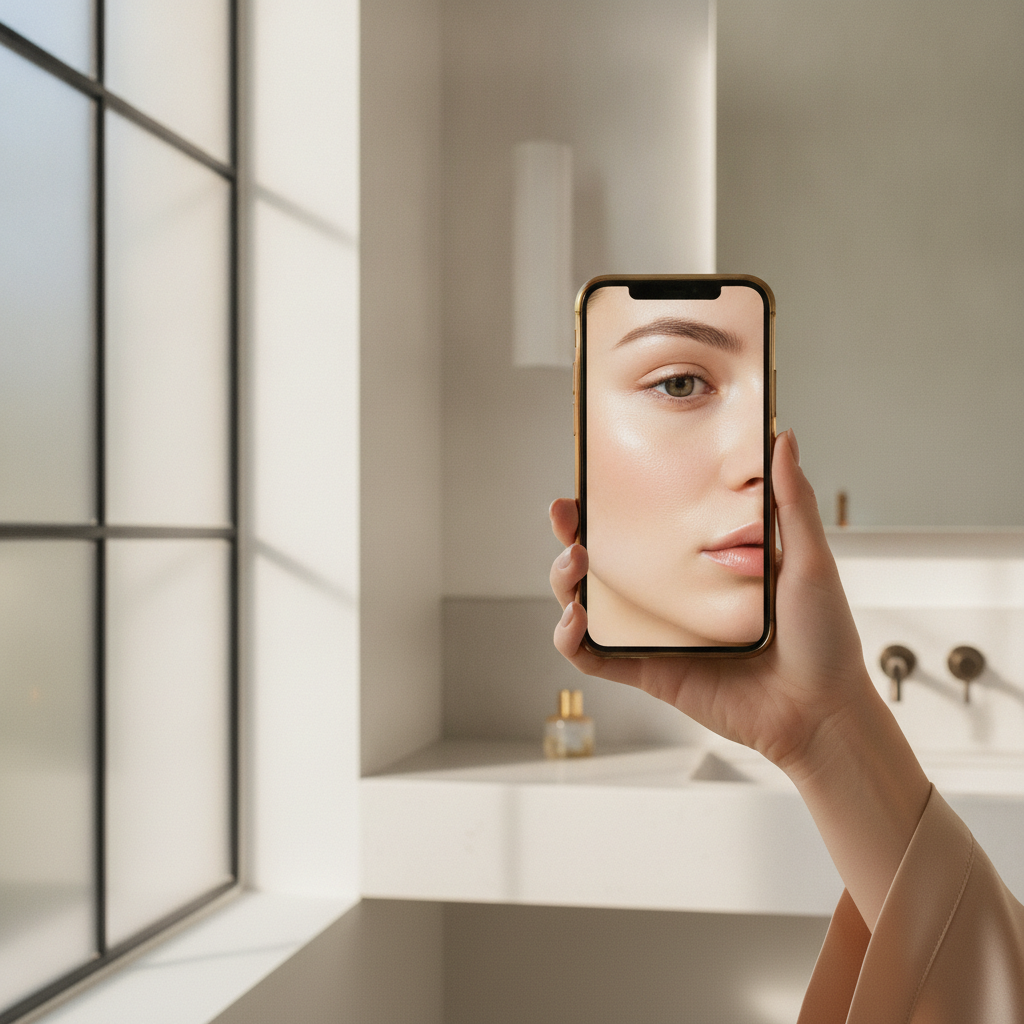
For decades, accurate skin diagnosis required a dermatologist's eye and an appointment slot you couldn't get for three months. Today, AI-powered skin analysis is moving that diagnostic capability into your bathroom mirror. Companies including Proven, MySkinGenius, and others have built machine-learning systems trained on thousands of clinical skin images, capable of identifying conditions like acne severity, rosacea, hyperpigmentation, and texture issues from a single phone photo.
The technology works because dermatologists themselves follow consistent patterns when diagnosing skin. An AI model trained on labeled clinical imagery can learn those patterns and apply them faster than manual assessment. What changes everything is scale: a dermatologist sees perhaps a dozen patients a day; an AI system processes millions of images monthly, continuously refining its accuracy.
For you, this means real-time feedback on skin conditions you might otherwise ignore, paired with product recommendations calibrated specifically to your skin's needs. No guessing whether that inflammation is rosacea or sensitivity. No buying the same expensive serum everyone else buys.
How AI Reads Your Skin
Image recognition models at the core of these systems work through a process called convolutional neural networks (CNNs). The system doesn't understand "acne" the way you do. Instead, it recognizes patterns in pixel data that correlate with clinical diagnoses because dermatologists labeled thousands of training images that way.
A typical workflow takes five steps:
- You photograph your face under consistent lighting (apps guide you through positioning)
- The system extracts key skin regions (forehead, cheeks, chin, nose)
- The model analyzes texture, color, and surface patterns against trained datasets
- Results are scored across multiple dimensions: acne activity, sensitivity, hydration, pigmentation
- The app recommends products and ingredients aligned with those findings
The accuracy depends on training data quality. Most commercial systems report 85-92% agreement with dermatologist assessment on common conditions. That's not perfect, but it's reliable enough for consumer guidance and far better than guesswork based on marketing claims.
What makes this different from basic skin-type quizzes is specificity. The AI doesn't bucket you into "oily" or "combination." It quantifies sebum distribution, identifies specific inflamed areas, and tracks how those metrics change week to week. A hydrating serum your skin needed in January may become unnecessary by April; the app tells you that.
The Trust Problem and Why It Matters
Dermatology AI has a documented bias problem. Most training data comes from lighter-skinned patients, meaning the systems perform worse on darker skin tones. Research from Harvard Medical School and other institutions shows that some dermatology AI tools have up to 35% higher error rates on skin of color.
Responsible companies in this space now disclose these limitations publicly and are actively retraining models on more diverse datasets. Proven's recent work includes explicit testing across Fitzpatrick skin types (the standard classification system for skin tone). This transparency is non-negotiable: an app that works for 90% of users is not a trustworthy product.
The second trust issue is clinical validation. Some apps make strong claims about treating skin conditions. In the US, that claim crosses into drug or medical device territory and requires FDA oversight. Most consumer skincare AI tools stay in the recommendation lane: "Based on your analysis, you might benefit from niacinamide." They avoid "This will treat your acne."
Why Dermatology Was Ripe for AI
Three factors aligned to make personalized skin diagnostics possible at scale:
Availability of labeled data. Dermatology images have been systematically cataloged for decades. The International Skin Imaging Collaboration dataset alone contains over 30,000 clinical images with expert annotations.
Visual problems are pattern-matching problems. Unlike diagnosis that requires bloodwork or imaging, skin conditions announce themselves visually. AI excels at visual pattern recognition.
Consumer demand for personalized products. The skincare market is fragmented. People spend $70 billion annually on products, often buying blindly. An AI that narrows that choice to what actually works for your skin solves a real friction point.
Dermatologists weren't displaced by this technology; they were never an option for most people. In the US, there are roughly 11,000 dermatologists serving 330 million people. Even if you had insurance coverage, wait times are measured in months. AI democratizes access to the diagnostic step that should come before you buy anything.
| Aspect | Dermatologist Visit | AI Skin Analysis | Traditional Quizzes |
|---|---|---|---|
| Cost | $150-300 without insurance | $5-15 per month or free | Free |
| Wait time | 4-12 weeks | Instant | Instant |
| Specificity | Highly specific to your skin | Quantified across 5+ dimensions | Generic buckets (oily/dry) |
| Tracking over time | Requires follow-ups | Automated weekly/monthly | Manual, unreliable |
| Bias risk | Varies by individual clinician | Known, disclosed, improving | Undefined, usually absent |
What This Means for Product Recommendations
The real value prop isn't the diagnosis alone. It's the personalized product roadmap that follows.
When you tell a typical skincare app "I have acne," you get offered benzoyl peroxide and salicylic acid because those are the standard answers. When an AI system analyzes your skin and finds acne concentrated on your chin and jawline, with accompanying sensitivity on your cheeks, the recommendation shifts: maybe a targeted spot treatment for the acne areas, paired with a barrier-repair serum for the sensitive zones, rather than a full-face assault.
Luxury skincare brands are building this into their DTC (direct-to-consumer) experiences. Olay and others have rolled out AI recommendation engines that guide you from cleanser through SPF based on your specific analysis. The margin structure makes sense for them too: a customer who gets three products that actually work for their skin reorders at 70% rates. A customer who bought five products that didn't work doesn't come back.
This also flattens one of skincare's oldest trust barriers: product-market fit through trial and error. Instead of buying a $60 serum and discovering it makes your skin worse, you know before you buy whether the ingredient profile is aligned with your skin's needs.
The Runway Consideration: If you're building a skincare routine, the AI analysis upfront saves you money downstream. A $10 analysis tool that prevents three bad $50 purchases pays for itself immediately. More importantly, it compresses the feedback loop from months of trial-and-error to weeks of targeted refinement.The Limits of AI Skincare Diagnostics
AI analysis is reliable at identifying what's happening to your skin. It's much less reliable at explaining why, or at predicting which treatment will work.
Your acne might be hormonal, bacterial, fungal, dietary, or stress-induced. An image can confirm the presence of acne; it cannot distinguish these causes. The AI recommendation will be statistically sound, but your skin might respond differently than the aggregate data predicts.
Allergies and sensitivities are also harder to diagnose from images alone. You might react to a recommendation because of an ingredient sensitivity that doesn't show up in visual analysis. The responsible apps acknowledge this: "This is what we see. This is what we recommend. Track how your skin responds and tell us if it's wrong."
Severe conditions (cystic acne, melasma, rosacea) still warrant professional dermatology. The AI is a triage tool and a maintenance partner, not a replacement for clinical expertise when things are serious.
Testing the Algorithm on Yourself: If you're trying an AI-powered app, take a baseline photo with consistent lighting, time of day, and minimal makeup. Retest weekly at the same conditions. The consistency matters more than any single analysis. Skin improves slowly; the value of the app shows up over 8-12 weeks of data, not days.Who's Building This and Where It's Headed
Proven, backed by Y Combinator, focuses on ingredient matching and real-time skin tracking. MySkinGenius partners with beauty retailers to offer AI analysis alongside product recommendations. Olay Skin Advisor is the largest-scale implementation, embedded directly in a major brand's DTC flow.
The next phase of development is integration with wearables. Skin condition changes with sleep, hydration, and stress. Apps that combine phone imaging with smartwatch data on sleep quality and heart rate variability can predict flare-ups before they happen and recommend preventive adjustments. This is happening now in early-stage startups; it will be mainstream within three years.
The second frontier is treatment outcome prediction. Instead of recommending ingredients based on population-level data, future AI will train on outcome data: which ingredients work for which skin conditions in which individuals, weighted by skin tone, age, and baseline condition. That requires years of longitudinal user data, which companies like Proven are actively collecting.
Why This Matters Beyond Convenience
The deeper shift is about information asymmetry. For a hundred years, skincare worked because dermatologists controlled access to diagnosis, and beauty companies controlled access to products. That asymmetry is collapsing.
You can now see what a dermatologist sees. You can ask why a product is recommended, examine the ingredient logic, and make informed trade-offs. A $5 retinol alternative might not work as well as prescription tretinoin, but you know that going in. You're not buying on marketing; you're buying on data.
For skincare brands, this is disruptive. You can't sell based on vague claims anymore if the customer has AI confirmation that the product won't address their actual skin concern. But it's also an opportunity: brands that lean into ingredient transparency and outcome tracking will win customers who've moved past the guessing phase.
The lesson from my work across D2C skincare and SaaS is the same: talk to customers about what they actually need before you build or sell anything. AI diagnostics automate that conversation at scale. They're not magic. They're just better mirrors.
FAQ
What's the difference between AI skin analysis and a dermatologist diagnosis?
AI skin analysis identifies visible skin conditions from images and recommends products; a dermatologist can explain underlying causes, prescribe medications, and diagnose non-visible conditions that require bloodwork or deeper assessment. Use AI for routine guidance and tracking. See a dermatologist when AI suggests something severe, when you don't respond to recommendations, or when you have systemic symptoms (hormonal acne, unexplained rashes).
Can AI skincare apps work accurately on dark skin tones?
Current AI systems have documented bias, with 35% higher error rates on darker skin tones according to Harvard Medical School research. Responsible apps like Proven now test across all Fitzpatrick skin types and disclose their limitations publicly. If you have dark skin, check whether the app you're considering has published accuracy data broken down by skin tone before paying for it.
How often should I use an AI skin analysis app to track progress?
Weekly or bi-weekly analysis is most useful for tracking trends without noise from daily variation. Your skin fluctuates with hydration, hormones, and sleep; a single photo doesn't mean much. Take images at the same time of day, in the same lighting, and minimal makeup. After 8-12 weeks of consistent tracking, you'll see patterns the app can use to refine recommendations.
Is AI skincare analysis FDA-regulated?
Apps that make diagnostic claims ("This app can treat acne") or recommend drugs fall under FDA oversight as medical devices. Apps that only analyze and recommend over-the-counter products ("Based on your skin, we suggest niacinamide") are not regulated as medical devices, but they should be transparent about their limitations and accuracy rates.
Can AI recommendation engines replace a dermatologist?
No. AI is best used for initial assessment, ingredient matching, and routine maintenance. Severe conditions, unexpected reactions, systemic issues, or cases where AI-recommended products don't work warrant professional evaluation. Think of it as a triage step that gets you accurate information before you spend money on products or appointments.
What personal data do AI skincare apps collect and how is it used?
Most apps collect your photos and skin analysis results to train and refine their models. Before uploading images, check the app's privacy policy. Some sell anonymized data to skincare brands. Others keep it private. If you're sensitive about facial biometric data, read carefully. Some apps now offer analysis without storing your images permanently.
Will AI skincare recommendations work for my specific skin if I have a chronic condition like rosacea or eczema?
AI works well for identifying the condition and recommending general principles (gentle cleansers, barrier repair ingredients, avoiding triggers). But rosacea and eczema are highly individual. What calms one person's rosacea might trigger another's. Use the AI recommendation as a starting point, track your response carefully, and adjust. Discuss unusual or severe cases with a dermatologist before committing to any new product.
Sources: International Skin Imaging Collaboration, Harvard Medical School on AI bias in dermatology, FDA guidance on clinical decision support software